
Black youth believe in their ability to make change, but our schools aren’t helping them
Commentary by Rashid Duroseau and Andrew Wilkes
When Black youth appear in public conversations about civics, it’s usually in the context of disparities: whether it’s lower scores on the NAEP Civics assessment, underfunded schools or limited access to high-quality civic education.
These are real, urgent issues. But they are only half the story.
Black youth are frequently among the most civically engaged young people in the country, yet they are too often absent from conversations about civic excellence.
While it is true that only about 10 percent of Black eighth graders scored at or above proficiency on the last NAEP Civics assessment, it isn’t because they lack civic values or leadership potential.
It’s because they often attend schools where civics has been deprioritized, crowded out by preparation for high-stakes testing in other subjects or flattened into textbook worksheets that erase the very histories and voices the students live and breathe.
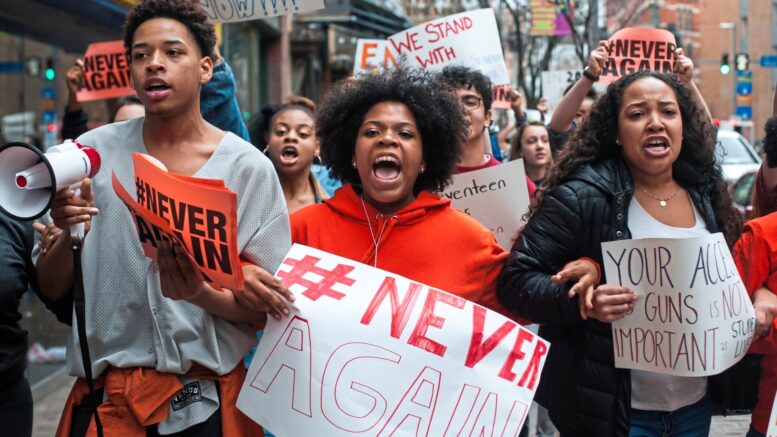
As we approach the 250th year of America’s national origin story, there’s another truth that we need to recognize: Black youth do engage in civic action. They protest. They organize. They show up at town halls, write petitions, push for change and go with their parents to vote at higher rates than their peers.
Black teens were more likely than their peers to engage in nearly every form of civic action measured, according to the State of Young People 2024 Research Report.
And they’re not just participating— they believe in their ability to make change. Forty-two percent of Black youth say they believe there are ways they “can have a say in what the government does,” compared with only 29 percent of other young people, the report found.
This paradox—high civic engagement despite limited civic learning—demands our attention. It is a story of both brilliance and neglect.
On one hand, it shows that Black youth are inheritors and innovators of a long tradition of civic activism, rooted in resilience, community and justice. On the other hand, it reveals how our education system continues to under-deliver for the very students most committed to improving their communities and our democracy.
This paradox prevents Black students and their peers from accessing the kind of comprehensive, community-based civics that would prepare them to steward democracy in their local communities even more effectively, not only for today, but for America’s future.
If we continue to view and evaluate civic readiness predominantly through test scores and student participation in formal instruction, we will miss the extraordinary civic leadership that already exists among Black youth. Worse, we risk reinforcing outdated narratives that reduce this highly engaged demographic of students to data points, ignoring their public contributions and the lived wisdom they demonstrate every day.
Organizations like Democracy Prep Public Schools, a national network of pre-K to grade 12 tuition-free public charter schools, and the nonprofit Generation Citizen offer a more expansive understanding of civic education—one that affirms the agency, insight and leadership already present in communities historically excluded from full civic participation. Generation Citizen works with over 33,000 middle and high school students annually through community-based civics programming that empowers them to understand their communities and take action to improve them. Students identify local issues, develop policy proposals and present their ideas to public officials.
The outcomes are real: Democracy Prep alumni were 16 percentage points more likely to register to vote and 12 percentage points more likely to vote than comparable peers who didn’t attend the network, a peer-reviewed longitudinal study found. Generation Citizen’s impact evaluation has found that 90 percent of its students report an increased adoption of civic skills as a result of their civic learning experience.
All students deserve a civic education that equips them to understand and shape the world around them; however, when Black youth—who are often denied such opportunities—gain access to rigorous, affirming civic learning, the transformation is especially profound.
We must expand our definition of civic excellence and access to civic education. Civic participation is not just about what you know—it’s also about what you do, what you believe and how you show up for your community.
The metrics, curricula and education policy priorities in the U.S. should reflect this understanding by supporting project-based civic assessment, fully funded state-issued civic seal programs that recognize students for demonstrated civic readiness and money for teachers’ professional development.
At a time when political polarization and distrust in public institutions are reaching new heights, we need to take commonsense steps to ensure that students in every community can access high-quality civics. We also need to invest—systematically and sustainably—in civic education for historically marginalized communities.
This means more than adding a unit on the branches of government. It means implementing culturally responsive, participation-driven civics that equips students with the tools and confidence to make change.
It means funding civic internships, student leadership councils and school-based organizing opportunities. It means listening to students who are already leading and supporting them with the tools needed to go even further.
Black youth are not waiting to be empowered—they’re already leading. Schools can—and must—rise to meet them.
Andrew Wilkes works for Generation Citizen, and Rashid Duroseau for Democracy Prep Public Schools.
Source: hechingerreport.org, June 30, 2025