
Recent news of organizing and outreach work with NC farmworkers
By El Futuro Es Nuestro
Farmworkers who arrived in May from Mexico face new exploitative H-2A rules cutting their wages, not to mention the threat of heat stress in a state with no in-the-field regulations at all – even our neighbor to the North, Virginia, has better regs than we do! But advocacy and religious allies are helping EFEN/IOF urge NC Commissioner of Labor Luke Farley to address the dangers of heat (and we need your help too).
Beyond regular outreach to members in labor camps and on their Sunday outings to Walmart, we also found allies this month while speaking at a convention on food systems and from the stage at a May Day rally in front of large crowds of labor supporters.
We’re continuing to build El Jornalero, our eventual agricultural cooperative and we had an amazing workday out at the land this month- check out photos below! And, amidst all of this, we’re creating a strategic plan that will help us become more focused, more collaborative, and better prepared for what’s ahead.
Farmworkers are doing the math
Under new regulations, H2A workers are being charged rent for the privilege of living in substandard conditions – and now they’re documenting it.
Under new H2A regulations from the Trump Administration, not only have H2A wages been lowered by 30 percent, but growers are getting away with further wage theft: now, they are also allowed to pay workers less by an additional $1.68 per hour as a rent deduction.
EFEN/IOF members at labor camp in Wilson, NC decided to do the math: 28 workers on the farm x 40 hours of work per week (a low estimate) x $1.69 less paid per hour = $1892.80 per week, times four weeks = $7,571.20 per month that workers are subsidizing the cost of housing in just one labor camp!
The workers also inspected the housing facility and found seven rat holes, one sink that does not work, infested cabinets for food storage, and beds held up by bricks. Workers at multiple camps have come forward to complain about the housing and urging an end to the wage deduction (which is optional on the part of the growers). What do you think? Is this housing worth nearly $1900 per week?
Cultivating our land: volunteer workday
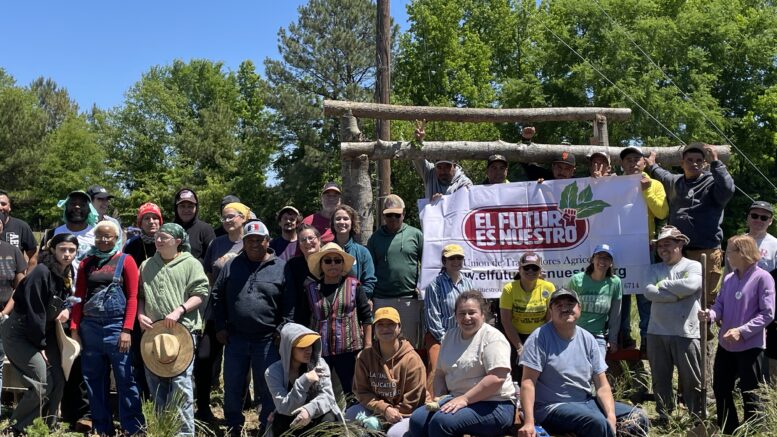
On Sunday, May 3rd, a group of nearly 50 hardworking and committed EFEN/IOF worker-members and volunteers assembled on our land in Nash county to officially begin the growing season, and to begin building initial infrastructure for our dream – a multi-purpose living, working, and meeting space for farmworkers at El Jornalero (the Laborer’s Farm).
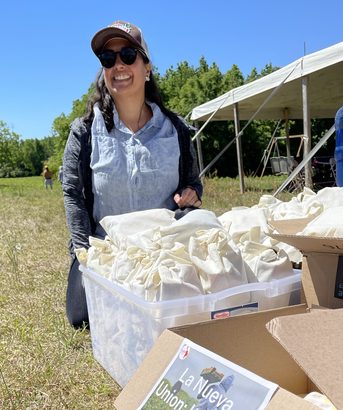
Under the guidance of farmworkers, some volunteers planted corn, peppers, sweet potatoes and wildflowers, while others packed heat-stress relief kits donated from Davidson College and many other community groups.
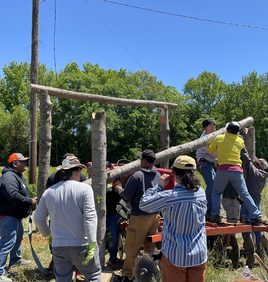
EFEN/IOF members supervised the construction of a tall frame for solar panels and a water tank below out of salvaged wood and lumber cut from nearby trees.
When solar panels are installed later in the summer, they will serve a water pump that can irrigate cultivated fields, and – in the future – as buildings. Two staff from RAFI’s Puerto Rico project will be coming to train individuals on the installation.
1453 pounds of scrap metal and garbage were removed from the property. Seven boxes of donations with first aid kits, shoes, clothes and hydration packets were collected. What a successful event!
Thanks to all who participated. Read more about the work day in Enlace Latino’s article, “They sow hope on farmworker land in Nash County.”
Workers’ Memorial Day: praying for farmworkers to “come home safe”
On Workers’ Memorial Day, April 28, EFEN/IOF, along with other allies with the NC Heat Stress Coalition and the Unitarian Universalist Church of Raleigh, held a vigil in honor of farmworkers who have lost their lives in North Carolina’s fields.
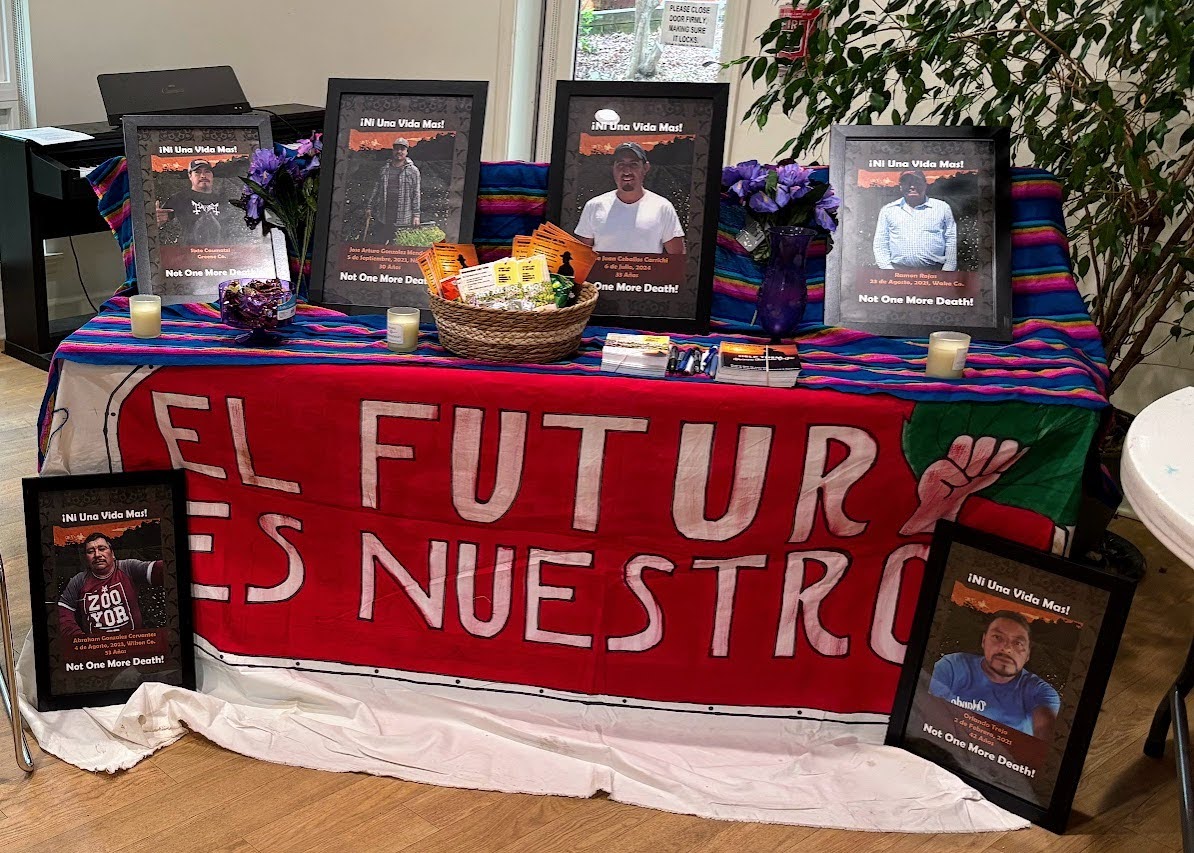
Postcards were sent to NC Labor Commissioner Luke Farley reminding him that farmworkers are not coming home safe as he promised (one of his slogans was “Every worker deserves to come home safe” – we agree!). For farmworkers to come home safe, we need legal mandates for water, breaks and medical attention to stop the deaths of workers in the fields. We encourage churches, schools, and community organizations to coordinate your own vigils and postcard writing parties to urge Luke Farley to take action to protect farmworkers. Email itsourfuture2021@gmail.com for post cards and information on planning your own vigil.
Partners for Sustainable Food Systems
On May 7, EFEN/IOF coordinators Lety and Maria joined partners from across the Southeast for Farmworker Justice’s inaugural gathering for food system partners in Atlanta: “Connecting Partners for a Stronger U.S. Food System- Southeast Regional Convening.”
Allies from all segments of the food system in the South: farmers, cooperatives, food banks, farmworker service agencies, as well as farmworker advocates, came together to learn and develop strategies together. We’re grateful for the meaningful dialogue, new relationships, and the shared commitment for a sustainable food system that includes justice for farmworkers.
Looking ahead & planning for long-term success
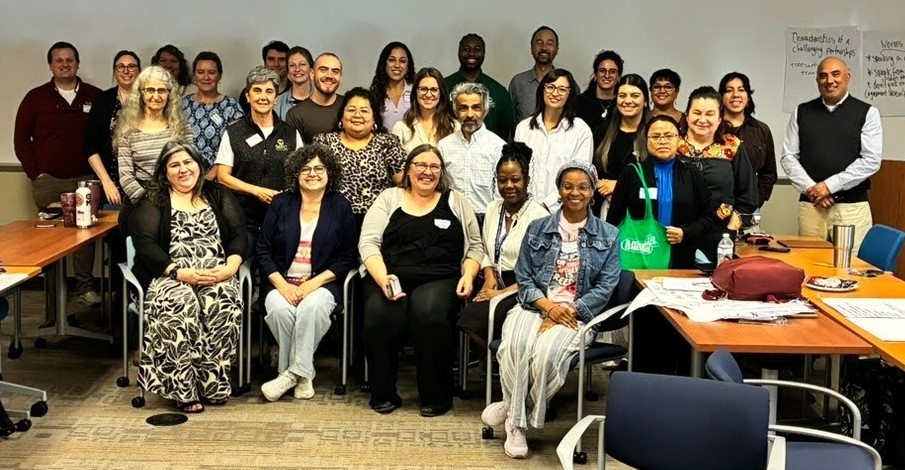
Early this year, EFEN/IOF committed to developing an organizational strategic plan. As we grow, we want to ensure that we allocate our resources and time effectively, strategically, and sustainably.
We are lucky to be guided by experienced trainers from Popular Education Consultants / La Tapizca who are leading intense discussions, one-on-one conversations, and group interviews with our farmworker-member board, staff, and our advisory group.
As we consider our successes, our barriers, and how to increase our effectiveness, we feel we are moving towards a stronger blueprint for growth, impact, and sustainability. It’s a huge challenge, but as a result of this careful consideration, we will be more focused, more collaborative, and better prepared for what’s ahead.
Source: elfuturoesnuestro.org Newsletter from, May 26, 2026