
By Al Mayadeen English
Microsoft and other American technology corporations successfully pushed the EU to adopt a confidentiality clause that blocks public access to environmental data from individual datacentres.
Microsoft and other US tech giants have effectively lobbied the EU to obscure the environmental impact of their data centers, with their demands to keep sustainability metrics out of public view written almost word for word into EU rules, The Guardian reported, citing an investigation.
The secrecy provision, which the European Commission added to its proposal nearly word-for-word following industry lobbying in 2024, prevents scrutiny of pollution emitted by individual datacenters. Researchers are left with only national-level summaries of energy consumption rather than facility-specific data.
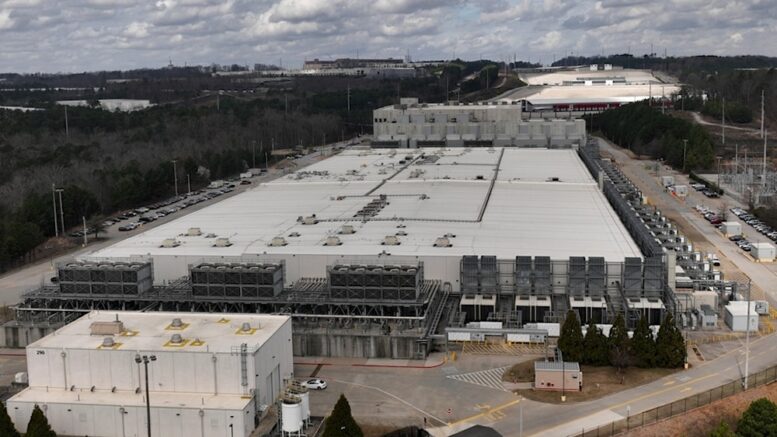
The rapid expansion of AI chatbots has fueled a construction boom in chip-filled warehouses that consume massive amounts of electricity. A portion of that power demand is being satisfied by burning fossil gas.
Legal experts have raised concerns that the blanket confidentiality clause may violate EU transparency regulations and the Aarhus Convention, an international treaty guaranteeing public access to environmental information.
Professor Jerzy Jendrośka, who spent 19 years on the body overseeing the Aarhus Convention and teaches environmental law at the University of Opole in Poland, told The Guardian he cannot recall a comparable case in two decades of experience. He said the provision clearly appears inconsistent with the convention’s requirements.
Documents obtained by Investigate Europe, an independent journalism cooperative that led the research in collaboration with The Guardian and other media partners, show that the rules have already been employed to protect data centers from public oversight.
A senior commission official sent an email last year citing the secrecy clause while reminding national authorities of their obligation to keep confidential all information and key performance indicators for individual datacenters. The official noted that various requests for access to documents from the media and the public had all been refused.
The EU updated its energy efficiency directive in 2023 to require datacenter operators to report key performance indicators. In subsequent guidance, the commission proposed publishing aggregated environmental metrics.
During public consultations in January 2024, technology companies pushed to classify all individual datacenter information as confidential, citing commercial interests. This demand means the data cannot be accessed, even through freedom of information requests.
The final text of the article differs from industry demands by only a few words. It states that the commission and member states shall keep confidential all information and key performance indicators for individual datacenters communicated to the database, with such information considered confidential due to the commercial interests of operators and owners.
Industry submissions during the public consultation reveal that the groups that lobbied for the change include Microsoft, DigitalEurope (an industry organization whose members include Microsoft, Google, Amazon, and Meta), and Video Games Europe (whose members include Microsoft and Netflix).
Ben Youriev, a researcher at InfluenceMap, a non-profit organization tracking corporate lobbying, said the case exemplifies how the tech sector is grappling with a shift toward higher energy consumption. He noted that while the industry previously spoke out in support of clean energy and emissions reductions, many firms have since fallen silent and appear to be prioritizing rapid global datacenter expansion over supporting renewable energy and swift emissions cuts.
Microsoft told The Guardian that it supports greater transparency around datacenters because sustainability disclosures can help drive better outcomes and build public trust. A spokesperson said the company is taking further steps to increase openness while protecting confidential business information.
The EU executive considers the regulation a first step toward creating a common EU rating scheme for datacenters. In a second phase, it plans to publish sustainability scores from the database to make it easier to compare different datacenters in the same region. Under the current proposals, however, the majority of what operators report would remain confidential.
According to sources close to the matter, the commission’s internal position is that making each datacenter’s information public might lead operators to stop reporting their sustainability metrics. Yet EU data shows that only 36 percent of eligible datacenters have complied with existing reporting requirements.
Alex de Vries-Gao, a researcher at Vrije Universiteit Amsterdam, said the industry has a real interest in keeping the numbers hidden. He told The Guardian he has mostly had to rely on aggregated data when trying to quantify the environmental footprint of AI, adding that public information is extremely limited.
The EU is obligated under the Aarhus Convention to ensure that environmental information is systematically made available to the public by authorities. Luc Lavrysen, former president of the Belgian constitutional court and emeritus professor of environmental law at Ghent University, said the confidentiality clause clearly violates EU transparency rules and the Aarhus Convention.
Kristina Irion, an associate professor in information law at the University of Amsterdam, reached the same conclusion. She said the sweeping presumption of confidentiality incorrectly prioritizes corporate interests over public access to at least some of the data, arguing that what deserves protection should be determined on a case-by-case basis rather than through blanket secrecy.
Source: almayadeen.net, April 18, 2026