
Commentary by William Murphy
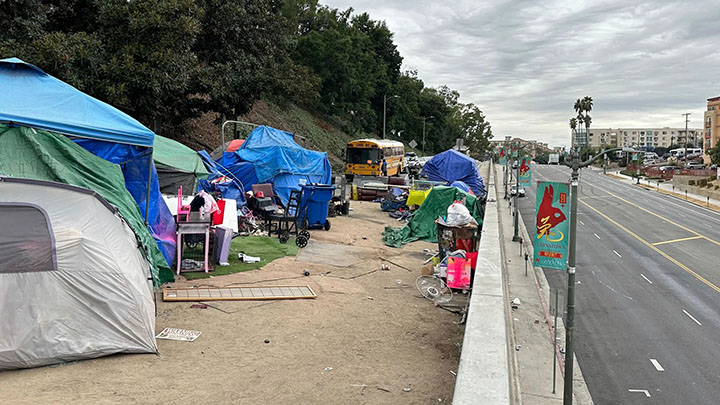
When survival becomes illegal in your own city, displacement isn’t a side effect—it’s the policy.
This is the quiet logic of the Erasure Economy: a political system that systematically removes people once they stop being profitable. Housing in the United States is no longer organized around shelter; it’s organized around extraction. Rent, mortgages, zoning, and “quality of life” ordinances function together as a sorting mechanism—not to house people, but to decide who gets to stay.
Start with affordability. Wages stagnate while rents and home prices soar, driven by financialization, speculative investment, and landlord consolidation. Housing is treated less like infrastructure and more like a financial asset class. Once that happens, scarcity becomes a feature, not a bug. High prices are not a failure of the system—they are the system working exactly as designed.
Now look at the escape hatches people turn to when traditional housing becomes impossible. Tiny homes? Banned or strangled by zoning codes written for single-family suburban fantasies. Manufactured housing? Bought up by private equity, rents jacked up, residents displaced. Living in a vehicle? Criminalized through parking ordinances, anti-camping laws, and constant police harassment. RV living, once a retirement fallback, is now treated as a public nuisance. Car camping becomes a misdemeanor. Existing while poor becomes a crime.
This is not about safety, sanitation, or aesthetics—those are just the respectable excuses. If it were about safety, cities would provide legal, serviced places to live. If it were about health, they’d invest in sanitation, not citations. If it were about dignity, they’d prioritize housing as a human need. Instead, public policy keeps circling the same unasked question: where are the poor supposed to live?
The answer, unspoken but clear, is “somewhere else.”
Forced migration is the endgame. Seniors on fixed incomes are pushed out of the cities they built. Low-wage workers are driven farther and farther from jobs that still depend on their labor. Entire populations are shuffled across state lines, into deserts, into forests, into invisibility. This isn’t mobility—it’s exile. The market prices people out, and the law makes sure they can’t adapt.
Calling this “lifestyle choice” politics is a deliberate lie. No one chooses to live in a car because it’s trendy. No one parks an RV because zoning hearings are fun. These are survival strategies in a system that has decided certain people are surplus. When alternative forms of living are banned instead of supported, the message is unmistakable: adapt quietly, disappear, or be punished.
This is class warfare with paperwork. It’s violence administered through ordinances, permits, and fines instead of batons. And it’s expanding—because as long as housing is treated as a commodity first and a necessity second, the circle of the disposable will keep widening.
The real crisis isn’t homelessness. It’s a political economy that refuses to make space for people it no longer profits from.
William Murphy is an ex–U.S. empire insider turned Marxist analyst.
Source: futuredude.substack.com, January 20, 2026