
Revisiting permanent revolution in a time of permanent crisis
Commentary by Dr. Michael John-Hopkins
The current moment is undeniably dangerous.
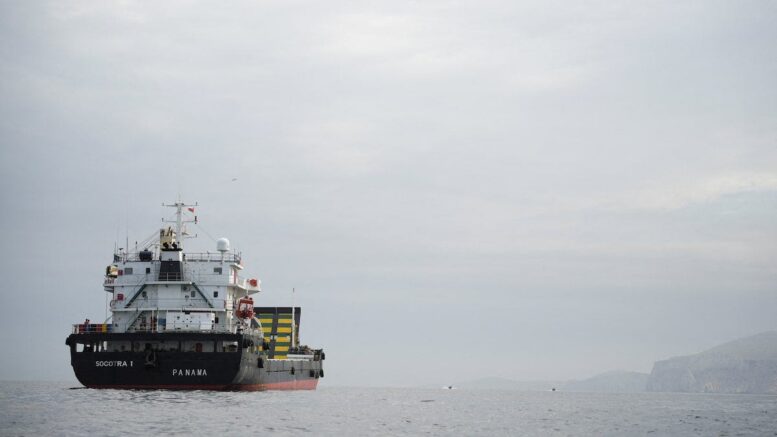
A prolonged conflict in the Middle East is now triggering sustained energy shortages, global recession, and intensified geopolitical instability. Ecological collapse could amplify these dynamics, producing cascading failures across food systems, economies, and political institutions.
But the crisis also provides clarity.
It reveals that the global economy is far more fragile than assumed, as private risk management mechanisms are breaking down, and the existing system is increasingly unable to guarantee basic stability.
This does not guarantee transformation but it makes the question unavoidable and provides a historic opportunity for a paradigm shift.
Thinking strategically in an age of planetary breakdown and destruction
What does it mean to think strategically in an age of permanent crisis? First, it means abandoning the illusion that stability will return once the current Gulf crisis passes. Instability is no longer an interruption. It is becoming the operating condition of the system itself.
Second, it means recognizing that risk is already being socialized, but in uneven and often unjust ways across different countries. In some countries, States are intervening, markets are being underwritten, and collective resources are being mobilized.
The question is no longer whether collective management will occur, but where, how, and for whose benefit.
Third, it means confronting the international dimension of the problem. The crises we face, from war to climate breakdown to food insecurity, are structurally global. Without coordination across borders, even the most ambitious national efforts will remain constrained, fragmented, and vulnerable.
Finally, it means holding open the possibility of transformation without assuming its inevitability. Crisis creates pressure, but it does not determine outcomes.
Leon Trotsky wrote of the need for permanent revolution so that social progress does not end once one specific class can reap the lion’s share of accumulation, but our current moment suggests something different, namely the permanence of crisis. But within that condition lies a possibility, not a certainty, but a structural opportunity.
A system that cannot stabilize itself must, eventually, change. The question is whether that change will be managed or chaotic, democratic or authoritarian, emancipatory or exclusionary. Yet there is another question, quieter but no less important. What kind of world are we trying to stabilize, or transform, in the first place?
Here, the insights of E.F. Schumacher offer a different kind of orientation. Not a program, not a blueprint, but a set of deep principles that begin to point beyond the limits of our current frameworks. If the crises we face are planetary, then the response cannot be purely economic or purely political. It must also be civilizational, ecological, and unified around a deeper understanding of our relations not just with each other but our planet.
Small is beautiful: why human scale matters
A civilizational response requires us to rethink scale, not simply in terms of efficiency, but in terms of human and ecological limits. Systems built on concentration, extraction, and fragile global interdependence must give way, at least in part, to forms of organization that are more local, more resilient, and more accountable.
Small, in this sense, is not a retreat. It is a condition of sustainability. Schumacher’s central idea is that economic systems should be organized at a human scale. Large-scale systems tend to become impersonal, bureaucratic, extractive, environmentally destructive, whereas small-scale systems may be more adaptable, more democratic, and more meaningful for human life. Schumacher’s point was not that big is always bad, but that scale must match human needs and ecological limits, that the earth can provide for our basic needs, but not for our infinite greed.
Production by the masses, not mass production
Operating at a human level requires us to rethink production, not as mass output driven by abstract growth, but as participation in the reproduction of life. Production by the masses, rather than mass production, points toward economies in which people are not reduced to inputs, but are active agents in shaping their material and social worlds.
For Schumacher, modern economies prioritize efficiency through large-scale production, and so distributed production, labour-intensive but meaningful work, and local economic participation have both economic and moral merit, in that work should not simply be about producing goods, but it should develop human capacities and dignity.
The concept of intermediate technology
Meaningful work requires us to rethink technology, not as an autonomous force driving progress, but as something to be chosen, shaped, and limited. Appropriate or intermediate technologies, rooted in local conditions and human needs, offer a different path from systems that maximize power while externalizing risk.
The concept of intermediate technology is one of Schumacher’s most important contributions, as it posits a design principle that technology should sit between traditional, low-productivity tools and highly capital-intensive industrial systems, in the sense that it is affordable, locally maintainable, resource-efficient, suited to local conditions, and fit for purpose, not simply the most advanced available.
This design principle is hugely relevant today when it comes to technologies such as renewable micro-grids and materials, decentralized agriculture, low-cost manufacturing, digital tools adapted for local use, and other repairable, long-lasting, and cross-compatible technologies.
A critique of growth for growth’s sake
Fundamentally, the planetary crisis requires us to recognize that we have been living off capital, not income. The natural systems that sustain life, soil, water, forests, biodiversity, have been treated as expendable inputs rather than the foundation of all economic activity. As these systems degrade, and planetary tipping points are reached, then the illusion of endless growth begins to break down.
Schumacher rejected the idea that continuous economic growth constitutes progress, and instead argued that infinite growth on a finite planet is impossible as growth often produces environmental destruction, social alienation and breakdown, and resource depletion.
In this way, Schumacher both embodies and calls for the mainstreaming of theory and practice relating to ecological economics, degrowth debates, peak-oil, transition, and sustainability discourse.
The preservation of natural capital
Importantly, Schumacher distinguished between income (what can be consumed) and capital (what must be preserved) and argued that modern economies treat natural capital (forests, soil, fossil fuels) as income and so are effectively liquidating and destroying the planet.
This is remarkably aligned with theory and policy on modern planetary boundaries, such as the safe and just space for humanity, and ecological collapse analysis emerging across a range of national security assessments.
Think globally, act locally
Schumacher calls us to rethink the purpose of the economy itself. His simple formulation, economics as if people mattered, now appears almost radical. It asks us to consider that work should be meaningful, that communities should be sustained, and that the economy should serve life rather than the other way around.
A core value within Schumacher’s work is that global problems (poverty, ecology, development) must be understood at a systemic level, but solutions must be rooted in local conditions. This orientation rejects one-size-fits-all development models and top-down technocratic planning, and instead prioritizes local knowledge, local institutions, local participation.
The counterpoint to mainstream economics treating people as inputs or costs and prioritizing growth over well-being, is that economics should serve human flourishing, support meaningful work, and sustain communities This is a direct challenge to GDP-focused growth models and purely efficiency-driven policy
Taken together, these principles point toward something that is not easily captured by existing political categories. They suggest that we are living through not only a crisis of systems, but a crisis of orientation and paralysis.
A question of how we understand our relationship to each other, to work, to nature, and to the future. In this sense, the search for solutions cannot be confined to policy or institutional design, important as those are. It also involves a shift in how we think about value, scale, and purpose.
A movement away from domination and extraction, toward stewardship and interdependence, a recognition that resilience is not simply a technical problem, but a social and ethical one involving simplicity, by avoiding unnecessary consumption, and non-violence; by avoiding exploitation of human and non-human animals and planetary ecosystems.
These notions of resilience are perhaps a modest form of what might once have been called a spiritual insight in the sense that posits that Earth is a self-regulating, living organism where biota and their environment evolve together to maintain habitable conditions, and that many aspects of global capitalism are detrimental not only to the Earth as a safe and just space for humanity, but life on planet Earth itself.
Dr. John-Hopkins is a Lecturer in Law and coordinator for International Humanitarian Law at Oxford Brookes University in Oxford, UK.
Source: savageminds.substack.com, April 26, 2026. A longer version of this article is available online.