
JD Vance A VERY Wealthy Man
By Dean Blundell
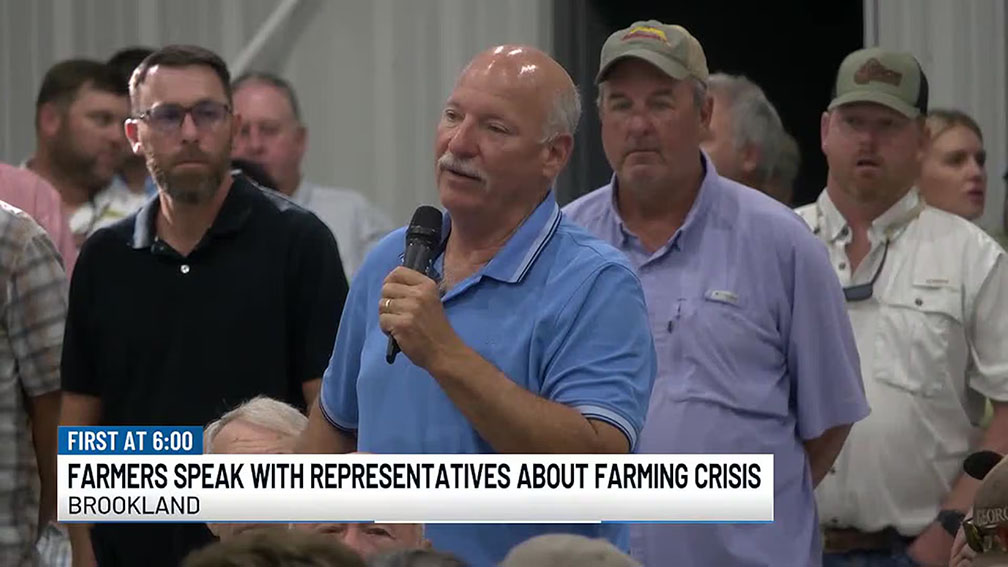
America’s farm economy runs on thin margins and long memories. You plant in hope, you harvest in reality, and you live in the spread between input costs and what the buyer will pay. Change either side of that equation fast enough—and hard enough—and even a well-run operation can buckle.
That’s what a sweeping tariff-and-retaliation cycle does. It hits you from both directions at once:
Sell side: key export markets push back or pull back, depressing prices and demand.
Cost side: imported inputs (metals for equipment and bins, components, fertilizer) get more expensive, pushing repair bills and cap-ex higher.
When those two lines cross—lower checks, higher bills—banks start calling, extensions get shorter, and “options” shrink to auction, bankruptcy, or a sale-leaseback where you sell the dirt and rent it back just to keep operating.
This is where the story shifts from policy to who benefits when you’re forced to sell.
The foreclosure pipeline
Tariffs and retaliation make revenue less predictable and often smaller.
Input inflation (metals, parts, fertilizer) makes costs more predictable—but higher.
Cash flow stress brings covenants into play; distressed owners sell land or equity.
Financial platforms step in to buy farms, frequently through sale-leasebacks that keep the operator on the tractor but move the deed into an investment vehicle.
Investors and platforms collect up-front deal fees and annual management fees, plus rent and appreciation over time. Volume increases when distress increases.
One of the best-known platforms in this space is AcreTrader. Its core model is simple: assemble capital, acquire farmland in LLCs, and charge fees to source, close, and manage those acres. In practical terms, that means one-time deal fees (commonly low single digits) and ongoing management fees (often under 1% annually) on assets under management. Scale that model across dozens or hundreds of farms, and the fee stream compounds—especially when distress pushes more acres to market.
Sale-leasebacks can keep a farm operating—but at the cost of ownership. The investor gets the deed; the original operator becomes a tenant, paying rent and carrying the weather risk without the long-term upside of the land.
Where politics meets the platform: JD Vance, Narya Capital, and Peter Thiel
Here are the key relationships, as publicly reported and disclosed:
Narya Capital AcreTrader. In 2020, Senator JD Vance co-founded Narya Capital, a venture fund that later invested in AcreTrader. Public filings also show Vance had a personal stake connected to AcreTrader during his VC tenure.
Vance’s carry. Senate ethics disclosures indicate Vance retains carried-interest rights in Narya’s fund. In plain language: if Narya’s portfolio companies appreciate or exit, he shares in the profits.
Peter Thiel’s role. Tech billionaire Peter Thiel helped bankroll Vance’s political rise (famously cutting a large check to boost Vance’s 2022 run) and is widely reported to have backed Narya financially. If Thiel is an investor in Narya, he participates in fund returns alongside other limited partners.
Important nuance: There’s no public record that Thiel personally holds a direct stake in AcreTrader outside of any indirect exposure via Narya.
AcreTrader’s liquidity event. In 2025, AcreTrader was acquired by Proterra. While financial terms weren’t public, acquisitions are precisely how early venture investors—and anyone with carry—can realize gains.
Put differently, a set of political and financial actors with influence over national policy (and proximity to the administration setting tariff policy) also have financial exposure to a model that benefits from more farmland changing hands. That doesn’t prove intent. But it does establish a glaring conflict of interest: the same policy shock that accelerates farm distress can increase deal flow, fees, and exit value for a farmland-acquisition platform—and for the venture fund and its beneficiaries behind it.
“Tariff populism” vs. farm math
You’ve heard the slogans—“reciprocal tariffs,” “standing up to foreign cheaters,” “bringing jobs home.”
Exports don’t move on slogans. Buyers in Canada, Mexico, and Asia don’t absorb cost hikes; they switch suppliers, grind down basis, or retaliate. Ag is a big, visible target.
Metals and components ripple through everything. Tariffs on steel, aluminum, and key industrial inputs show up in the price of tractors, combines, bins, pivots, and parts. OEMs pass those costs through. So do dealers. So do repair shops.
Fertilizer follows geopolitics. Potash and other inputs are global commodities; new import taxes or friction raise delivered prices. You pay it in cash; nobody pays you for it at the elevator.
Debt doesn’t care about politics. Higher interest rates, thinner margins, and price volatility hit the same line on your balance sheet: debt service coverage. When that slips, terms tighten, and “we’ll get you to harvest” becomes “what can we sell.”
None of this is theoretical. You can see it in farm auction calendars. You can hear it in the length of hold times at your lender. You can feel it every time you sign a repair ticket for parts that used to cost 20–30 percent less.
How the money moves (step-by-step)
Policy shock raises costs and reduces market access.
Margins compress; operating notes stretch; collateral gets tested.
Assets move: outright sales, auctions, or sale-leasebacks.
Platforms package farms into investment products, earning fees up front and every year after.
Venture funds (e.g., Narya) see portfolio growth and eventual exits; anyone with carry or LP exposure participates in those gains.
Narrative control: while rural communities absorb the hit, political allies frame tariffs as “toughness,” obscuring the pipeline from policy shock → distress → asset transfer.
Call it what you want. Critics call it a land grab in slow motion. Supporters call it market efficiency. On paper, it’s just incentives doing what incentives do.
What this means this readers who care about small farms and are concerned about government control over food production and distribution will be interested.
This isn’t about left vs. right. It’s about who owns America’s food-producing acres and who profits when family balance sheets are pushed past the limit.
Fee math beats yield risk. A platform’s income doesn’t depend on rain, heat units, or river levels. It depends on assets under management and transactions. Distress increases both.
Policy risk is concentrated in rural America. Tariffs are decided far from the fields they affect. The costs land here; the gains often settle in fund statements and cap tables somewhere else.
Conflicts should be on the record. If an elected official retains a carried interest in a fund with exposure to farmland acquisitions —and that official supports policies that intensify farm distress—that’s a conflict the public deserves to understand in daylight.
Questions every citizen should demand answers to
Financial exposure: Do current officeholders or their family entities retain carried interest or LP stakes in funds with farmland-acquisition exposure?
Policy impacts: What analysis did they rely on to justify broad tariff expansions given known ag retaliation patterns?
Guardrails: What safeguards exist to prevent policymakers (or their close allies) from profiting from market dislocations their own policies magnify?
Ownership transparency: Will platforms and funds publicly disclose geographic concentrations of farm purchases and the share acquired via distressed sales or sale-leasebacks?
Remember, much like 2008, this is the intentional tanking of America’s economy in a certain industry so few power brokers can profit from the suffering and misery of the have-nots.
US.
The bottom line
A healthy farm economy requires reliable markets and manageable costs. Tariffs that choke exports while raising inputs are a one-two punch. When that punch lands, farmland-buying platforms and their financial backers can profit—by design—from the wave of transactions that follow. When political figures retain a financial interest in those backers, the conflict of interest is not hypothetical.
That isn’t populism. It’s a pipeline: policy shock distress asset transfer fees and exits. And unless it’s checked by transparency and accountability, more of America’s working acres will migrate from family balance sheets to fee streams of couch humping elites like JD Vance and all of his “NEW” rich friends.
You didn’t think they’d tank America’s economy for free, did you??
Dean Blundell is a media guy, content provider, dog whisperer, Canadian raconteur, and muckraker.
Source: deanblundell.substack.com, September 10, 2025